Why a Webflow Expert for Startups Is Worth It
 Rinky Choudhary
Key Takeaways
- A startup site has to move as fast as the business behind it.
- Webflow gives founders a visual, editable site without a permanent developer.
- Hiring an expert saves the time founders can't afford to lose.
- Speed, SEO, and clean structure matter more than flashy effects.
- Plan for change: your first messaging is rarely your last.
Most startups launch a website twice. The first version goes up in a rush, cobbled together the week before a demo or a funding conversation. The second arrives a few months later, once the team realises that the rushed site is quietly holding them back. I've sat with founders on both sides of that gap, and the pattern is consistent enough to plan around.
A startup's site is not a brochure. It shifts as the product shifts, as the pitch sharpens, and as the audience comes into focus. That constant motion is exactly why a Webflow expert for startups tends to earn their fee faster than founders expect. The value isn't a prettier homepage; it's a site that can change as quickly as the company does.
The Website Problems Startups Keep Running Into
The specifics differ from company to company, but the underlying frustrations rhyme. Understanding them makes it easier to see why the do-it-yourself route often stalls.
Everything needs to change, constantly
Early-stage messaging is a moving target. The headline that made sense in March feels wrong by June, and the pricing you launched with rarely survives contact with real customers. A site that requires a developer for every small edit becomes a bottleneck at the worst possible moment.
No time and no in-house developer
Small teams are stretched thin. Founders are selling, hiring, and building the product all at once, which leaves the website to whoever has a spare afternoon. Hiring a full-time developer just to keep a marketing site current is hard to justify before revenue is steady.
Credibility gaps
Investors, early customers, and potential hires all check the website. A site that looks improvised undercuts an otherwise strong pitch. First impressions form quickly, and a startup rarely gets a second chance to make a confident one.
Why Webflow Fits the Startup Stage So Well
Webflow sits in a useful middle ground. It's more flexible than a template builder and far less demanding than a hand-coded site. For teams that need to move fast without accumulating technical debt, that balance is hard to beat.
Visual building without messy code
Webflow produces clean, standards-based markup from a visual canvas. You get the design freedom of custom development without a tangle of plugins, and the output stays fast and maintainable rather than bloated.
A CMS your team can actually use
Blog posts, case studies, job listings, and product pages can all live in Webflow's CMS. Once it's set up properly, a non-technical teammate can publish and update content without breaking the design or waiting on anyone.
Hosting and maintenance handled
There are no servers to manage, no security patches to chase, and no plugin conflicts to debug. Webflow's hosting is fast and reliable out of the box, which frees a small team to spend its attention on the product instead of infrastructure.
Benefits of Hiring a Webflow Expert
The platform is capable, but capability isn't the same as a finished result. This is where an experienced specialist changes the equation.
- Speed: what might take a founder weeks of trial and error takes an expert days, and the result is cleaner.
- Proper structure: a well-organised CMS and reusable components make future changes quick instead of painful.
- Built-in SEO: correct headings, metadata, fast load times, and clean URLs from day one, not bolted on later.
- Design that converts: layouts shaped around how visitors actually read and decide, not just how they look.
- A clean handoff: the site is left in a state your team can maintain without calling for help every week.
That last point is easy to overlook and genuinely important. A build is only a success if the people who inherit it can keep it alive.
Best Practices for a Startup Site That Lasts
Design for editing, not just launch
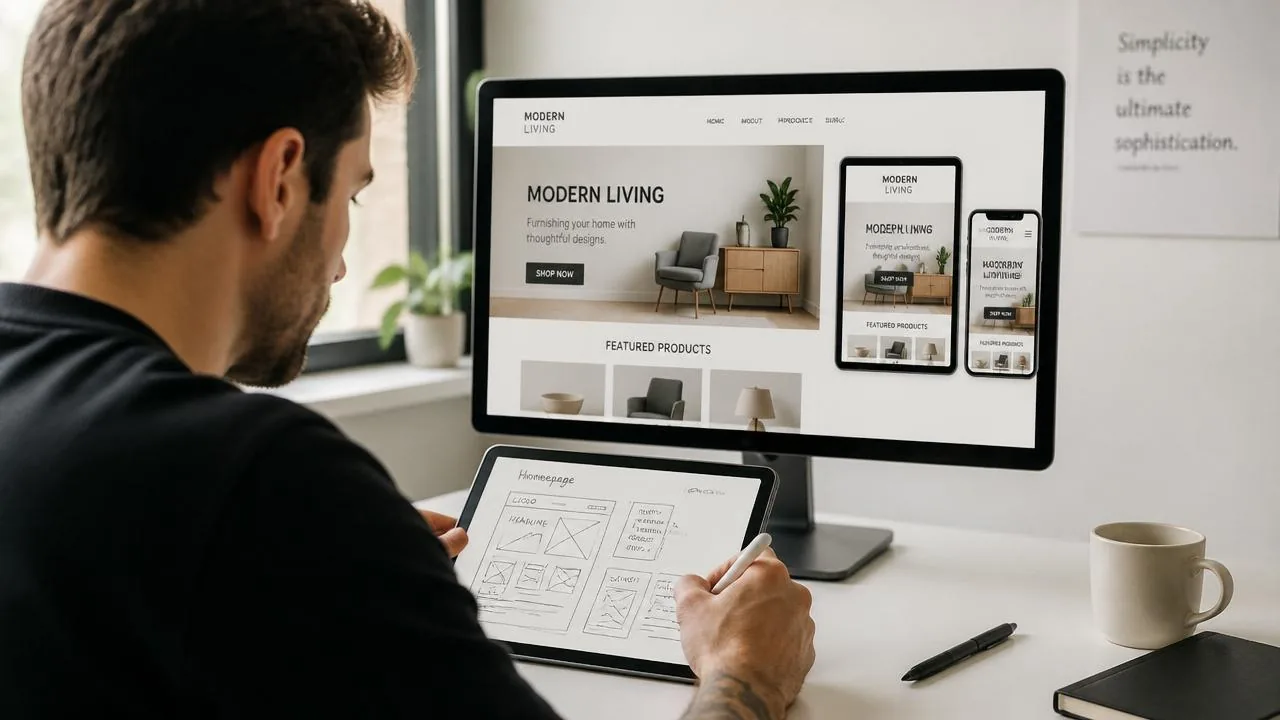
The most useful thing an expert can do is build with change in mind. Reusable components, a sensible CMS structure, and clear naming mean the site bends as the business grows instead of breaking.
Prioritise speed and clarity over effects
Heavy animations and elaborate interactions rarely move the needle for an early-stage company. A fast, clear site that explains the product in seconds will always outperform a slow, clever one.
Get the SEO foundations right early
Clean page structure, descriptive metadata, and a logical URL scheme cost little to set up at the start and are tedious to retrofit. Laying that groundwork early lets search visibility compound as you publish more.
Mistakes to Avoid
A few missteps show up again and again, and each one is avoidable with a little foresight.
Over-building before there's clarity
Pouring weeks into an elaborate site before the positioning is settled usually means throwing much of it away. Early on, a sharp, simple site beats an ambitious one that's already out of date.
Ignoring mobile
A large share of first visits happen on a phone, often from a link shared in a message or a post. A site that only feels right on a desktop quietly loses people before they read a word.
Treating the site as finished
A startup site is never truly done. Founders who set it up and forget it watch it drift out of sync with the product. Building something easy to update keeps that drift from ever taking hold.
Real-World Considerations
Beyond the build itself, a couple of practical realities are worth naming. Budgets are tight at the early stage, so the goal is rarely the biggest possible site, it's the smallest one that does the job well and can grow. Timelines are tight too; a specialist who has shipped similar work moves with a confidence that saves days of guessing. It also helps to look at a portfolio of real projects before committing, since finished work tells you far more about quality than any pitch. That kind of judgement is exactly what you're paying a Webflow Expert to bring.
Conclusion
A startup lives or dies on how quickly it can learn and adapt, and the website should support that rhythm rather than fight it. Bringing in a Webflow expert for startups isn't about outsourcing a task; it's about getting a site that's fast, credible, and genuinely easy to change as the company finds its footing. Get that foundation right and the website stops being a chore you keep meaning to fix and starts being an asset that grows alongside the business.
Building or rebuilding your startup site?
Let's create a fast, credible Webflow site that's easy to update as your startup grows. Get a free, no-pressure consultation.
Frequently Asked Questions
When should a startup hire a Webflow expert?
The right time is usually just before or during a launch, funding round, or repositioning, when the site needs to look credible and change quickly. If your team is spending more time fighting the website than improving the product, that's the signal.
Can't a founder just build the site themselves in Webflow?
Many do, and Webflow makes a simple site achievable. But an experienced hand gets you a faster, cleaner, more maintainable build in a fraction of the time, and sets up structure and SEO correctly so you're not rebuilding six months later.
How is Webflow different from WordPress for a startup?
Webflow bundles design, hosting, and a CMS into one visual platform with far less maintenance. There are no plugins to update or security patches to chase, which suits small teams that would rather focus on the business than the stack.
Will I still be able to edit the site after it's built?
Yes. A well-structured Webflow project lets non-technical team members update copy, images, blog posts, and pages through the editor without touching the design. A good expert builds with that handoff in mind.
How much does a Webflow expert for startups typically cost?
It varies with scope, from a focused landing page to a full marketing site with a CMS. What matters more than the headline figure is the time saved and the credibility gained, both of which tend to pay for the work quickly.
Related articles

Strategy · 9 min
Ecommerce Marketing Services: A Practical Guide to Sustainable Growth
A grounded guide to ecommerce marketing services, covering the customer journey, common challenges, real benefits, and best practices for stores that grow profitably.
Strategy · 9 min
Landing Page Design Services: A Practical Guide to Pages That Convert
A practical guide to landing page design services, covering planning, common challenges, benefits, and best practices for pages that convert real visitors.

Strategy · 9 min
Website Redesign: A Practical Guide to Getting It Right
A grounded guide to planning a website redesign — when it makes sense, the challenges to expect, and the practices that lead to better results.