Website Redesign: A Practical Guide to Getting It Right
 Rinky Choudhary
Key Takeaways
- Treat a redesign as a strategic project, not a cosmetic refresh.
- Start from clear goals and real analytics — not visuals.
- Protect SEO with a clean 301 redirect map and strong content.
- Design mobile-first and keep performance front of mind.
- Measure results against a baseline you set before launch.
A website is rarely "finished." Visitors change, technology moves on, and the goals a business had two or three years ago are seldom the goals it has today. At some point, small tweaks stop being enough and a full website redesign becomes the smarter investment. Done well, it can sharpen your message, improve performance, and make the whole experience easier for the people who actually use it.
Having worked on dozens of rebuilds, I've learned that the projects that succeed are rarely the ones with the biggest budgets. They're the ones with the clearest thinking. Below is a grounded look at how to approach a redesign, the challenges that tend to surface, and the practices that consistently lead to better results.
When a Website Redesign Actually Makes Sense
Not every problem needs a full rebuild. Before committing, it helps to be honest about why the current site is falling short. A redesign is usually justified when:
- The site looks dated and no longer reflects the quality of your work.
- Pages load slowly or behave poorly on mobile devices.
- Visitors arrive but rarely take the action you want them to take.
- The content structure has grown messy and hard to navigate.
- The platform makes everyday updates painful or impossible.
If only one of these is true, targeted improvements may be enough. When several overlap, a website redesign is often the cleaner path forward than patching the same issues repeatedly.
Start With Goals, Not Visuals
The most common mistake I see is treating a redesign as a purely visual exercise. A fresh look feels productive, but appearance is the last thing to settle, not the first. Begin by defining what the new site needs to achieve: more qualified enquiries, lower bounce rates, faster loading, or simply a structure that's easier to maintain.
Audit before you rebuild
Look at your existing analytics before throwing anything away. Which pages bring in traffic? Which ones convert? Where do people drop off? This data prevents you from accidentally removing content that's quietly doing important work. A redesign should build on what already performs, not erase it.
Map the user journey
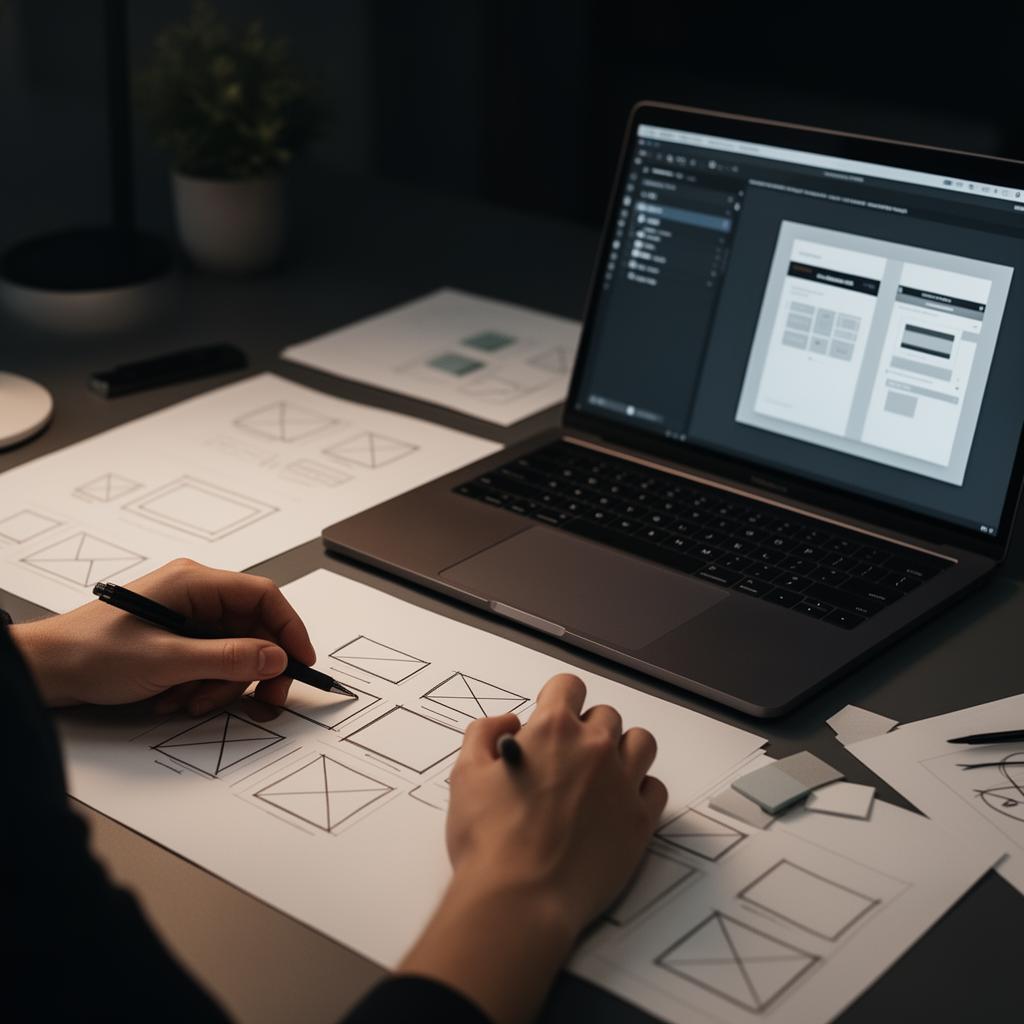
Sketch how a visitor moves from landing on your site to taking action. When you can see the journey clearly, gaps and friction points become obvious, and the new information architecture almost designs itself.
Common Challenges to Expect
Even well-planned projects hit friction. Knowing the usual obstacles in advance makes them far easier to manage.
Losing search rankings
This is the risk that worries people most, and rightly so. If URLs change without proper redirects, or content is stripped back too aggressively, hard-won search visibility can disappear overnight. Mapping old URLs to new ones with 301 redirects is non-negotiable.
Scope creep
"While we're at it" is one of the most expensive phrases in any redesign. New ideas surface mid-project, timelines stretch, and focus blurs. A documented scope, with a parking lot for future ideas, keeps things moving.
Content that isn't ready
Design depends on real content, yet copy and images are often the last thing prepared. Starting content early prevents placeholder text from quietly becoming permanent.
The Real Benefits of a Thoughtful Rebuild
When the planning is sound, the payoff goes well beyond a nicer appearance. A considered website redesign typically delivers:
- Better performance: modern builds load faster and feel smoother.
- Stronger conversions: clearer journeys turn more visitors into customers.
- Easier maintenance: a flexible CMS means updates without a developer.
- Improved trust: a polished, current site signals a credible business.
- Mobile-first experience: the majority of traffic finally gets a layout built for it.
Best Practices That Consistently Pay Off
Design for mobile first
Most visitors will see your site on a phone. Designing for the smallest screen first forces clarity and prevents the cramped, compromised layouts that come from shrinking a desktop design down.
Keep performance front of mind
Speed is part of the experience. Compress images, limit heavy scripts, and test on real devices. A beautiful site that takes six seconds to load still loses people.
Protect your SEO foundation
Preserve strong content, maintain a logical heading structure, write descriptive page titles, and keep your redirect map tidy. A redesign is a chance to strengthen SEO, not a reason to gamble with it.
Launch, then keep improving
Going live is a milestone, not the finish line. Watch how people behave on the new site and refine based on what you learn. The best sites evolve steadily after launch.
Real-World Considerations
Beyond the design itself, a few practical realities shape every project. Budget and timeline rarely stretch as far as hoped, so prioritise ruthlessly. Stakeholders bring competing opinions, so agree on who has the final say early. And technical decisions, like which platform to build on, have long-term consequences for how easily the site can grow.
If you're weighing up whether to start, it often helps to look at examples of work that balances clean design with solid functionality. You can explore a portfolio of Website Redesign projects to get a feel for what a considered rebuild looks like in practice.
Measuring the Results
A redesign is only successful if it moves the numbers that matter. Set a baseline before launch and track meaningful metrics afterwards: page load times, bounce rate, time on page, and conversion rate. Vanity metrics feel good, but the ones tied to business goals tell you whether the investment paid off.
Conclusion
A website redesign is most rewarding when it's treated as a strategic project rather than a cosmetic refresh. Start with clear goals, respect the data you already have, plan for the usual challenges, and keep the people who use your site at the centre of every decision. Get those fundamentals right, and the result isn't just a better-looking website, it's one that works harder for your business long after launch.
Thinking about a website redesign?
Let's turn your goals into a fast, beautiful site that converts. Get a free, no-pressure consultation and a clear plan for your rebuild.
Frequently Asked Questions
How long does a website redesign take?
Most small to medium projects take four to twelve weeks, depending on the number of pages, how ready the content is, and the complexity of the build. Clear planning is the single biggest factor in staying on schedule.
Will a redesign hurt my Google rankings?
It can if handled carelessly, but a careful approach protects them. Mapping old URLs to new ones with 301 redirects, preserving strong content, and keeping a clean structure usually maintains or even improves rankings.
How often should a website be redesigned?
There's no fixed rule, but every two to four years is common. Rather than following a calendar, redesign when the site stops supporting your goals, frustrates visitors, or no longer reflects your business.
Can I redesign my site without losing existing content?
Yes. A good redesign audits and carries forward content that performs, restructures what needs it, and removes only what no longer serves a purpose. Nothing valuable should be lost.
Related articles
View all
Strategy · 9 min
Why a Webflow Expert for Startups Is Worth It
A practical look at why founders hire a Webflow expert for startups: common website challenges, real Webflow advantages, benefits, and mistakes to avoid.

Strategy · 9 min
Ecommerce Marketing Services: A Practical Guide to Sustainable Growth
A grounded guide to ecommerce marketing services, covering the customer journey, common challenges, real benefits, and best practices for stores that grow profitably.
Strategy · 9 min
Landing Page Design Services: A Practical Guide to Pages That Convert
A practical guide to landing page design services, covering planning, common challenges, benefits, and best practices for pages that convert real visitors.